
Physical Therapy for Knee Pain in NYC
Performance-focused rehabilitation for runners, athletes, lifters, and active adults. We find what is driving the problem, build the capacity your body is missing, and get you back to training without compromise.
Your knee is not usually the problem.
It is the result.
Hip control. Foot mechanics. Quad strength under load. How forces move through your body during a squat, a landing, a change of direction. All of it meets at the knee. When something is not working well above or below, the knee is usually the first place it shows up.
This is why treating only the knee rarely fixes the problem. Runners develop patellofemoral syndrome not because something is wrong with their kneecap, but because their hip has stopped controlling the thigh bone under fatigue. ACL injuries happen not just from contact, but from the way an athlete plants and decelerates. Patellar tendon pain flares in lifters who have the strength to load the joint but have built up faster than their body could keep pace with.
The people who recover well are not the ones who follow a generic protocol. They are the ones who understand what drove the problem, build what their body was missing, and return to training with a system that holds up.
At Moment, every knee case begins with a full evaluation of how your knee works within the context of how your whole body moves. We use objective testing including force plate assessment, strength testing, and movement analysis under load to build a clear picture of what is actually driving the problem. Treatment is built from that picture, not from a standard protocol.
The people who recover well are not the ones who follow a generic protocol. They are the ones who understand what drove the problem, build what their body was missing, and return to training with a system that holds up.
At Moment, every knee case begins with a full evaluation of how your knee works within the context of how your whole body moves. We use objective testing including force plate assessment, strength testing, and movement analysis under load to build a clear picture of what is actually driving the problem. Treatment is built from that picture, not from a standard protocol.
0
Cookie-cutter protocols. Every plan is built from your evaluation, not a template.
3
NYC locations. Midtown, SoHo, Long Island City.
100%
One-on-one sessions. No aides, no hand-offs, no exceptions.
What a different approach looks like in practice
"I had been trying other places where I was handed a sheet of exercises and no one was looking at me while I did them. Nobody was seeing if I was doing the exercises correctly or listening to my feedback. Two months and I was doing exactly the same things and seeing no progress at all. From day 1 at Moment I was amazed by the dedication and effort. My therapist listened to my whole story, designed a plan, and we iterated on it after every single session."
Result: From pain after a 30-minute walk to unlimited walking, weighted leg training, and jumping — for the first time in over a year.
Knee conditions we treat
Each section below reflects our clinical approach: what drives the condition, how we assess it, and how we treat it. This is not a list of diagnoses. It is a description of how we actually work.
Runner's knee (patellofemoral pain syndrome)
OVERUSE — PATELLOFEMORAL
Runner's knee is among the most common overuse injuries we treat, and among the most frequently mismanaged. Pain sits behind or around the kneecap and gets worse with running, stairs, prolonged sitting, and squatting. Most people describe it as a dull ache that becomes sharp when they push through it.
The name is misleading. Runner's knee is not a running problem. It is a load problem. The kneecap tracks through a groove in the thigh bone, and when the muscles around the hip and knee are not sharing the work evenly, the kneecap gets pulled slightly off its path. That friction is what causes the pain.
We look at how load is distributed across the joint during your specific activities. For runners, that means watching you run when you are actually tired, not just on a treadmill at the start of a session. We examine hip strength, quad function, and foot mechanics, and build a progressive plan around what we find. Most people do not need rest. They need better preparation.
CLINICAL TAKEAWAY
Training does not stop during recovery. It gets smarter.
“Training does not stop during recovery. It gets smarter.”
ACL injuries and ACL reconstruction rehab
NERVE PAIN — LUMBAR AND GLUTEAL
SURGICAL AND TRAUMATIC
An ACL injury is one of the harder things an athlete goes through, and the quality of rehabilitation matters as much as the surgery itself. Most ACL reconstructions require nine to twelve months before a full return to sport, though this varies widely depending on the procedure, the demands of the sport, and how well strength and movement control are rebuilt.
The part most clinics underinvest in is the back half of rehab. Early recovery is relatively predictable: reducing swelling, regaining range of motion, getting the quad firing again. The real work is months four through nine, rebuilding the ability to cut, accelerate, and land with confidence and control. Athletes who skip this phase are the ones who get hurt again in their first season back.
At Moment, every ACL progression is driven by testing, not time. We use force plates and strength testing to measure how the recovering leg compares to the healthy one before clearing any new phase of training. You advance when the numbers say you are ready, not when the calendar does.
“A clearance based on time alone is not a safe clearance. We clear you when your body meets the standard.”
Meniscus tears
CONSERVATIVE AND POST-SURGICAL
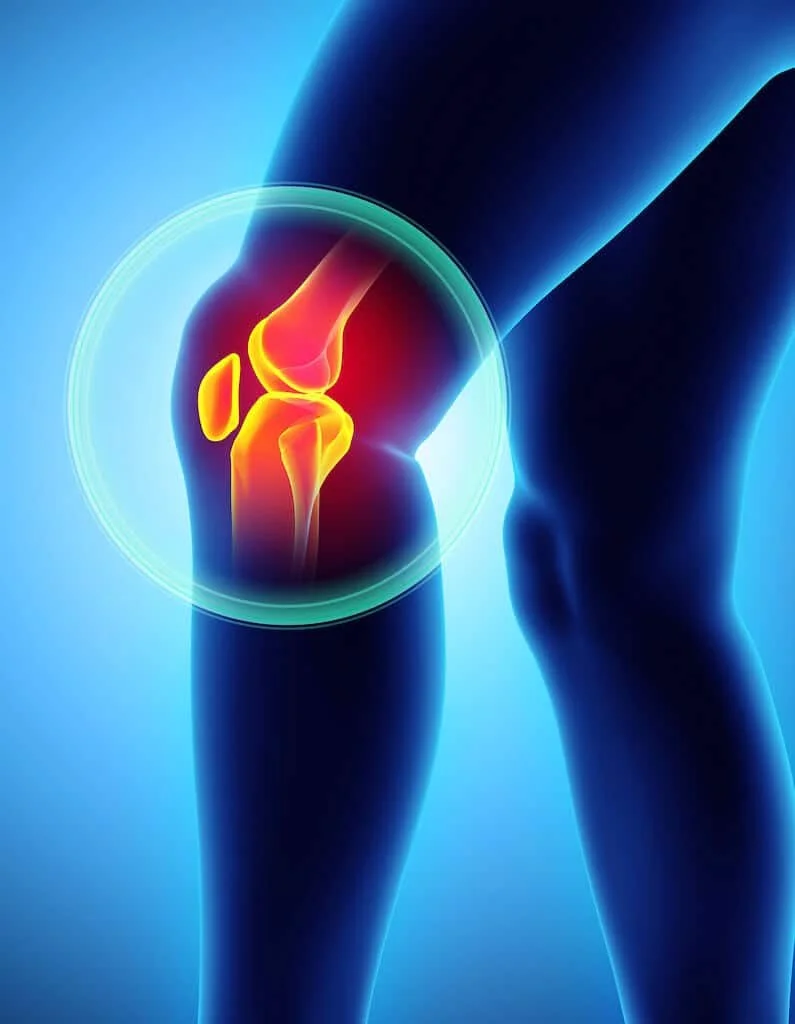
Not all meniscus tears require surgery. The meniscus acts as a cushion and stabilizer inside the knee joint, and tears range from minor fraying to more complex damage that locks the joint. Symptoms vary just as widely, from mild discomfort when squatting deeply to significant pain and swelling that makes walking difficult.
For many tear types, particularly in active adults, conservative management works well. The goal is to settle the irritation, get full range of motion back, and build enough strength around the knee that the joint is better supported during activity. For anyone returning to running or sport, we also look at how load is moving through the knee and make adjustments where needed.
For post-surgical repairs, we work in close coordination with your surgeon. Early sessions focus on protecting the repair while it heals. From there we build progressively toward full loading and return to sport.
“Many patients with meniscus tears are referred to surgery before completing a serious course of PT. That referral is often premature.”
Patellar tendonitis (jumper's knee)
OVERUSE AND TENDON
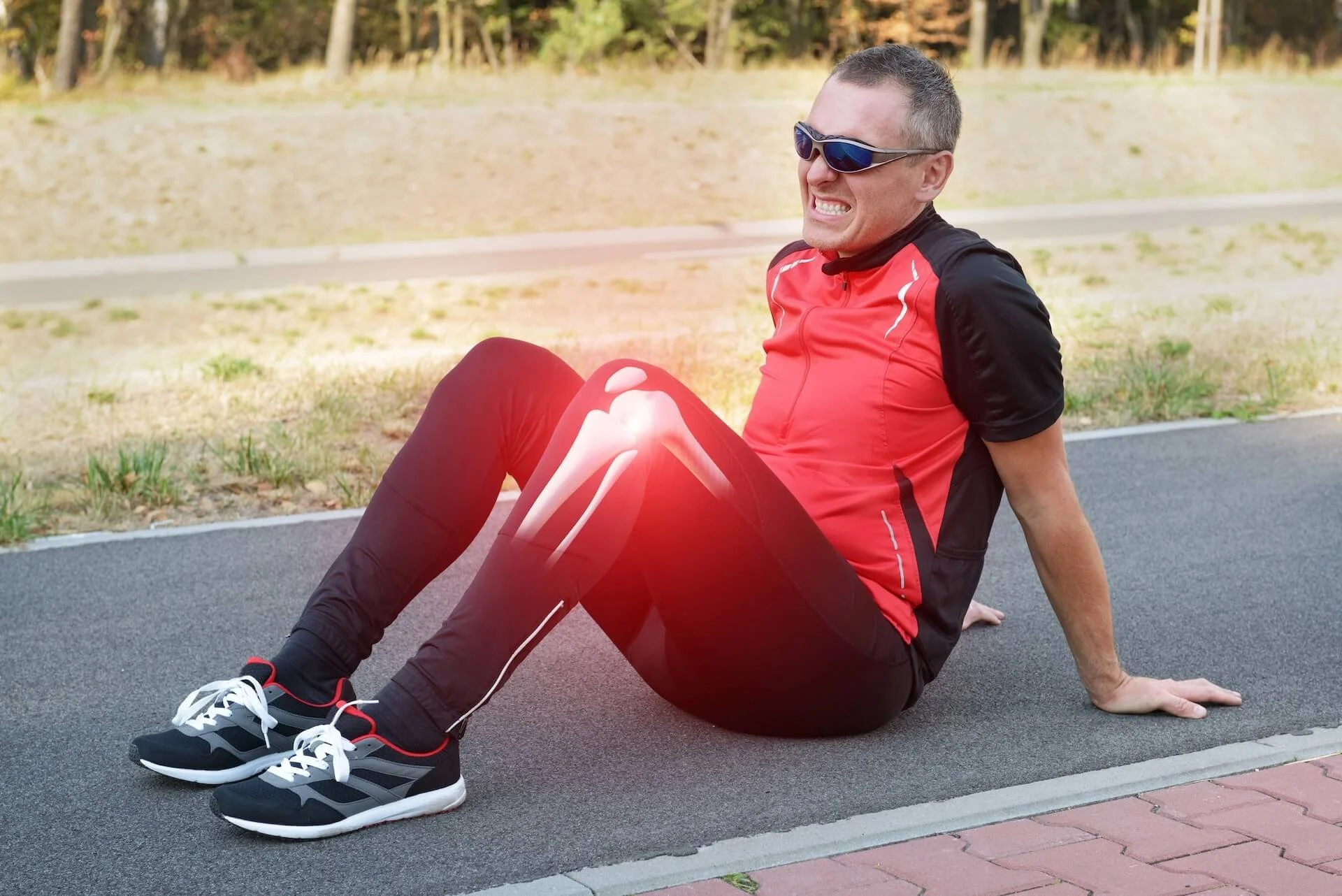
Patellar tendonitis affects the tendon that runs from the kneecap to the shin bone. It is most common in athletes who jump and land repeatedly, but it also shows up in runners and lifters who have increased their training load faster than their body could adapt to.
The characteristic pattern is pain just below the kneecap, worst when you first start moving, that often settles after warming up and returns once you stop. Rest alone rarely fixes it. The tendon needs to be loaded progressively to get stronger, and avoiding it entirely tends to make things worse over time.
Treatment is built around slow, controlled strengthening of the quad and the tendon itself. It is not comfortable in the early stages, but it is what consistently works. We manage the overall training load carefully throughout so we are building capacity rather than repeatedly setting things back.
“Tendons do not heal with rest. They heal with the right kind of load, applied at the right time.”
IT band syndrome
LATERAL KNEE PAIN — OVERUSE
IT band syndrome causes a sharp or burning pain on the outside of the knee that tends to appear after a predictable distance into a run. It is almost entirely an overuse condition, most common when runners have recently increased mileage, switched surfaces, or returned after time off.
The IT band is a thick band of connective tissue running down the outside of the thigh. It cannot be effectively stretched or foam rolled away, despite what most advice suggests. What actually drives the pain is a compression issue at the outside of the knee, caused by a spike in training load on top of movement habits that put extra stress on that area.
Getting rid of it requires two things working together: gradually bringing mileage back to a level the body can handle, and addressing the movement patterns, particularly how the hip works during running, that are creating the compression in the first place.
“Foam rolling and stretching have a limited ceiling with IT band syndrome. Fixing how the hip moves during running is what actually resolves it.”
Knee pain from strength training
LIFTING RELATED
Knee pain during squats, deadlifts, or other lower body work follows a few recognizable patterns. Pain at the front of the knee usually points to the kneecap or the tendon below it. Pain on the inside or outside of the joint is more often related to the meniscus or the ligaments on either side. Pain that shifts around or radiates is frequently coming from somewhere other than the knee itself.
Lifting places far more force through the knee than running, and small technical adjustments in foot position, squat depth, or bar placement can make a meaningful difference in where that force lands. Our therapists lift with barbells and kettlebells and assess your movement in the context of your actual training, not just generic movement screens.
The goal is not to steer you away from the training you care about. It is to find what is causing the problem, address it, and rebuild toward lifting without restriction.
“A PT who has never touched a barbell cannot adequately assess a lifter’s knee. Our team trains with the equipment you train with.”
Post-surgical knee rehab
ALL KNEE PROCEDURES
Whether you have had an ACL reconstruction, meniscus repair, total knee replacement, or another procedure, how well you rehabilitate matters more to your long-term outcome than the surgery itself. Regaining basic range of motion and the ability to walk is a starting point, not a finish line, especially for anyone who wants to return to sport, running, or serious training.
We work closely with surgeons and follow phase-based protocols, but every progression is driven by how your body is actually responding, not by a fixed schedule. You will always know what we are measuring, why it matters, and what it means for your timeline.
Our facilities handle everything from the early weeks of recovery through advanced return-to-sport testing, so you never need to switch providers as your rehab progresses.
“Rehabilitation determines more of your long-term outcome than the surgery itself. The quality of that process matters.”
Knee osteoarthritis in active adults
DEGENERATIVE — ACTIVE POPULATION
A knee osteoarthritis diagnosis does not mean you have to stop training. The evidence is consistent: exercise is the most effective treatment available for knee OA, and people who stay active reliably do better long-term than those who cut back to protect themselves.
What changes is how load is managed. Some movements are harder on arthritic joints than others, and knowing which ones matter for your specific situation makes a real difference. Building strength in the muscles around the knee reduces how much force the joint itself has to absorb. Small adjustments to how you walk or run can also take meaningful pressure off the most affected area.
Many active adults with OA come to us having been told their only options are injections, medication, or surgery, without having gone through a serious course of physical therapy. That is almost always where we start.
“Exercise is the most effective treatment for knee OA. The question is how to train well, not whether to train.”
Knee rehab at Moment ends at a specific destination: the activity you were doing before, done at the level you expect of yourself. Getting out of pain is a milestone, not the finish line.
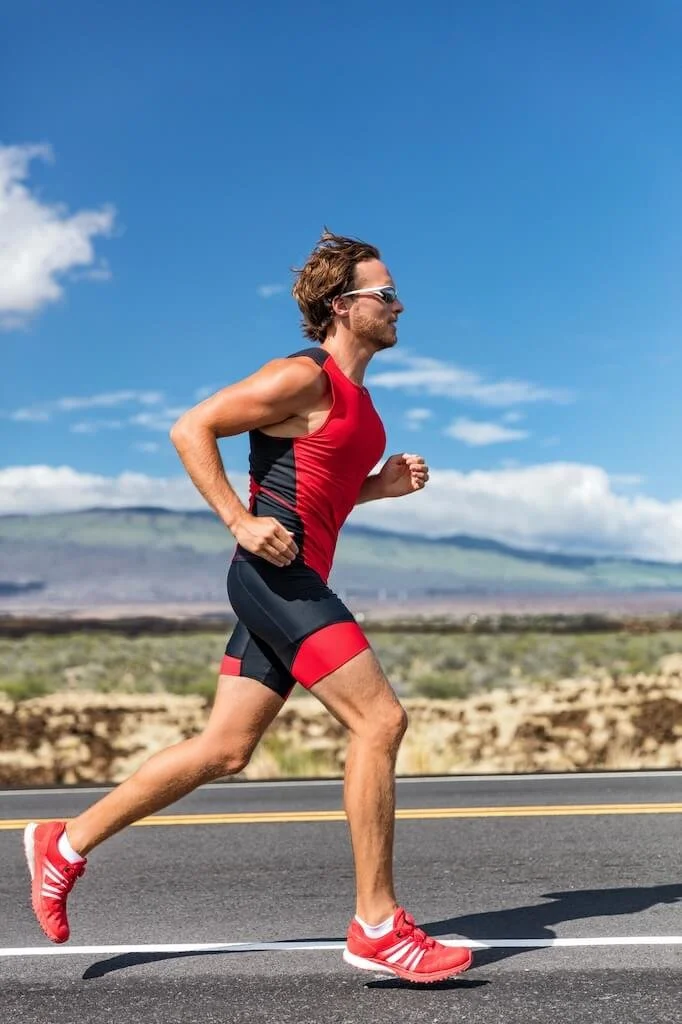
For runners, return to training is built around your mechanics, not just your symptoms. We use running gait analysis to evaluate how you move when you are actually fatigued, because most running injuries do not show up at mile one. They appear at mile twelve or sixteen, when the body starts taking shortcuts. Identifying those patterns and building the strength to support them is what keeps runners healthy through full training cycles rather than getting hurt on repeat.
For athletes returning from surgery, we use force plate and strength testing to measure how the recovering side compares to the healthy one before clearing return to sport. These are objective benchmarks. Re-injury rates drop when those benchmarks are met. We do not clear you because the calendar says so. We clear you because the data says so.
For lifters, return to training means returning to the actual movements. We assess your squat, your hinge, and the specific patterns that were causing problems, and rebuild them progressively from the ground up.
Beyond pain reduction.
Back to performance.
OUR PROCESS
How we evaluate and treat knee pain
Every new patient goes through a thorough evaluation before treatment begins. We look at the knee, and we look at everything connected to it.
-
01
Full movement evaluation
Range of motion, joint stability, single-leg balance, hip and ankle mobility, and how load moves through the body.
-
02
Objective strength testing
Precise strength measurements of the quad, hamstring, and hip compared to the healthy side and to benchmarks for your age and sport.
-
03
Force plate assessment
How much force each leg produces, how symmetrically it lands, and how efficiently it absorbs impact during sport-specific movements.
-
04
Running gait analysis
Mechanics assessed at real training paces and under fatigue, not just on a treadmill when you are fresh.
-
05
Individualized plan
Progressive treatment built around your goals, your timeline, and what the testing actually reveals about your body.
Every phase of treatment has a clear purpose and a measurable target. You will know what both are. Sessions are one-on-one with your physical therapist from start to finish.
OUR PROCESS
Serious patients. Serious outcomes.
Our knee patients share one thing: they want to get back to something specific, and they want to do it properly.
Runners
Managing patellofemoral pain, IT band syndrome, or tendon issues while staying in their training cycle.
Lifters
Working through training-related knee pain without stepping away from the barbell or kettlebell movements that matter to them.
Hybrid athletes
Training across multiple disciplines who need a PT that understands the full picture of what they are asking their body to do.
Post-surgical athletes
Recovering from ACL reconstruction, meniscus repair, or total knee replacement with testing-driven return-to-sport protocols.
Active adults
Managing early arthritis or long-standing knee pain and looking for a real answer beyond injections and medication.
Endurance athletes
Cyclists, triathletes, and long-distance runners with repetitive strain injuries that have not responded to standard approaches.
-
Almost always a combination of how hard you are training and how your body is moving. The most common causes are patellofemoral syndrome, IT band syndrome, and patellar tendon irritation. All three have identifiable causes that can be addressed without stopping running entirely. A proper assessment tells you which one you are dealing with and what to do about it.
-
In many cases, yes. A significant number of people who are told they need knee surgery have not yet completed a serious course of physical therapy. For meniscus tears, patellofemoral pain, and mild to moderate osteoarthritis, PT is often as effective as surgery with far less risk and a much shorter recovery. We will give you an honest picture of what is realistic for your situation.
-
A full return to sport after ACL reconstruction typically takes nine to twelve months. For high-demand sports, some research supports waiting even longer. What matters more than the timeline is meeting specific strength and movement benchmarks at each stage. We use testing to make those calls, not calendar estimates.
-
Pain going downstairs is a classic sign of patellofemoral syndrome. The movement puts high demand on the quad and increases the pressure between the kneecap and the thigh bone. If the quad is not strong enough or the hip is not doing its share of the work, that pressure becomes painful. It is very treatable with the right approach.
-
Yes, and for most conditions it is central to resolving it. Strong quads, glutes, and hamstrings take load off the joint itself, improve stability, and make the knee more resilient over time. The key is loading progressively so you are building strength without aggravating what is already irritated.
-
Runner's knee is the common name for patellofemoral pain syndrome, a condition where the kneecap is not tracking smoothly through its groove, creating friction and pain around the front of the knee. Despite the name, it affects cyclists, hikers, and people who sit at a desk all day, not just runners. It responds well to targeted physical therapy.
-
Earlier than most people do. If your knee is limiting your training, changing how you move, or has not improved after two to three weeks, it is worth getting assessed. The sooner you address it, the shorter and more straightforward the recovery tends to be.
Frequently Asked Questions
Moment Physical Therapy and Performance | Midtown Manhattan | SoHo | Long Island City, Queens